
What Kind of Editing Do I Need? A Clear Guide for Self-Publishing Authors

One of the most common questions we hear from authors is what kind of editing do I need?
It sounds like a straightforward question, but the answer is rarely one-size-fits-all. Editing should not be viewed as a singular step in the process, rather a series of stages, each designed to improve your manuscript in different ways.
Understanding those stages is what allows you to invest your time and budget wisely, and most importantly, publish a book that feels complete.
At Foglio, editing is not treated as a single step, but as a carefully sequenced process that supports clarity, structure, and reader experience.
What “Editing” Actually Means (and Why It’s Not One Thing)
Think of editing as a layered process, with each stage focusing on a different level of the manuscript, from big-picture structure down to final typos.
At a high level, most books move through four stages:
Developmental editing
Line editing (in some cases)
Copyediting
Proofreading
These stages are not interchangeable; they build on one another, and skipping ahead too quickly often leads to time wasted retracing your steps. Similarly, applying the wrong type of editing at the wrong time can cause unnecessary frustration and confusion. Not fun!
Doing the right things, in the right order, is the best way to arrive at a polished, professional manuscript.
Developmental Editing: Does Your Book Work?
Developmental editing looks at the structure of your book as a whole. This includes pacing, clarity, narrative flow, and whether the book delivers on its purpose.
For nonfiction, this might mean refining your argument or reorganizing chapters. For fiction, it often involves plot structure, character development, and pacing. Just imagine if Goldilocks stumbled upon the cottage at the same moment Papa Bear went back to grab his wallet; the story just wouldn’t work.
How to Know If You Need This Type of Editing
You likely need developmental editing if:
You’re still making large changes to chapters
Beta readers feel confused or disengaged
You’re unsure who the book is for
The structure feels uneven or incomplete
What To Expect from Developmental Editing
While this stage can feel demanding, this is where the biggest improvements happen. A strong developmental edit can transform a manuscript from “almost there” to truly compelling. It helps ensure your book connects with readers, not just exists on the page. Trusting the process really comes in handy at this stage; you might be longing for a quick polishing of details, but a deeper edit that rethinks portions of your book is where the magic happens.
Pro Tip: Start with beta readers. Before investing in professional editing, many authors benefit from structured feedback. We created this free beta reader questionnaire to help authors prepare their manuscripts for more effective professional editing later. Aren’t we great?
Line Editing: Refining Voice and Flow
Line editing focuses on how your writing sounds and reads at the sentence level. It improves clarity, tone, rhythm, and transitions. It’s like having Cyrano de Bergerac standing behind your computer chair (while you type away, listlessly thinking about how “you’ll tighten this all up later…”), only with the intention of strengthening your voice, not changing it!
How to Know If You Need This Type of Editing
You may benefit from line editing if:
Your writing feels uneven in places
Your tone shifts unintentionally
Sentences feel awkward or repetitive
What To Expect From Line Editing
Line editing will smooth out your writing and define its natural cadence. Sometimes, line editing naturally intersects with developmental editing, or even a deeper copyedit.
Working with Foglio’s editors means our authors work together with a person (Yes, a real human being, capable of nuance!) who respects your voice, your story, and is dedicated and invested with the outcome of your book. Our editors bring an in-depth, expert’s perspective to each unique project, and line editing is thusly treated with the gentleness of a gardener unearthing her seedlings.

Copyediting: Making Your Writing Correct and Consistent
Copyediting focuses on correctness; it’s very much out of the realm of gray scale, planted firmly in the black-and-white rules of grammar, punctuation, spelling, and consistency in style. Copyediting also ensures your manuscript follows a clear set of editorial standards, whether it’s our in-house style guide, or one that the author has developed or provided.
What To Expect From Copyediting
If your manuscript feels structurally complete and you are preparing for formatting, you are ready for copyediting! Expect that copyediting will remove all such distractions that pull readers out of the experience of your book, to establish a professional and polished finish. Note that copyediting does not fix structural issues; if deeper problems exist at this stage, your editor may point them out, but they will remain unchanged for the author to address.
Proofreading: The Final Quality Check
Proofreading is the final review after your book has been formatted. It catches small errors such as typos, spacing issues, and layout inconsistencies.
How to Know If You Need This Type of Editing
If your book is already typeset and ready for print or digital distribution, proofreading is the last step before publishing. It provides a final layer of confidence; even strong manuscripts benefit from a fresh set of eyes at this stage. As it’s quite limited in its scope, this type of editing cannot replace earlier stages.
If you want a broader look at how editing fits into the full publishing process, you can explore Foglio’s self-publishing timeline here.
Frequently Asked Questions
-
It depends on the stage of your manuscript. Early drafts often benefit from developmental editing, while finished manuscripts typically need copyediting and proofreading.
-
Copyediting focuses on grammar, consistency, and clarity before formatting. Proofreading happens after formatting and catches final surface-level errors.
-
Beta readers are helpful but they are not a replacement for professional editing. They provide feedback, while editors provide structured, technical refinement.
-
Yes. Editing should be completed before formatting. Proofreading is the only stage that happens after layout.
What About Editor’s Letters?
One of the most valuable parts of professional editing is not just the tracked changes, but the editor’s letter. An editor’s letter provides a high-level overview of your manuscript. It explains what is working, what needs attention, and why certain changes are recommended.
At Foglio, these letters are designed to help authors context, direction, and an opportunity to understand their work more clearly. For many authors, this becomes one of the most useful parts of the entire process.
DIY vs Professional Editing: Where to Draw the Line
It is possible to self-edit to a certain point; many of our authors revise their work multiple times before seeking help. However, it’s important to know that self-editing has limits. As the writer of the work, it’s often difficult to see your own blind spots, especially after spending months or years with a manuscript.
Professional editors bring distance and experience. They notice patterns, inconsistencies, and structural issues that are easy to miss on your own.
A balanced approach often works best. Revise your work carefully, gather feedback from beta readers, and then bring in professional support where it matters most.
Help us help you! Learn more about professional editing help.
Common Editing Mistakes to Avoid
Many authors run into the same challenges during editing:
Skipping developmental editing too early
Hiring the wrong type of editor
Editing a manuscript that is still changing
Treating proofreading as full editing
Ignoring valuable feedback
Most of these come down to timing. Editing works best when each stage is given the space and consideration needed.
How Foglio Supports Authors Through the Editing Process
At Foglio, editing is approached as part of a larger publishing process.
We work with authors to determine what kind of editing is appropriate, rather than applying a fixed package. Each manuscript is different, and the support should reflect that.
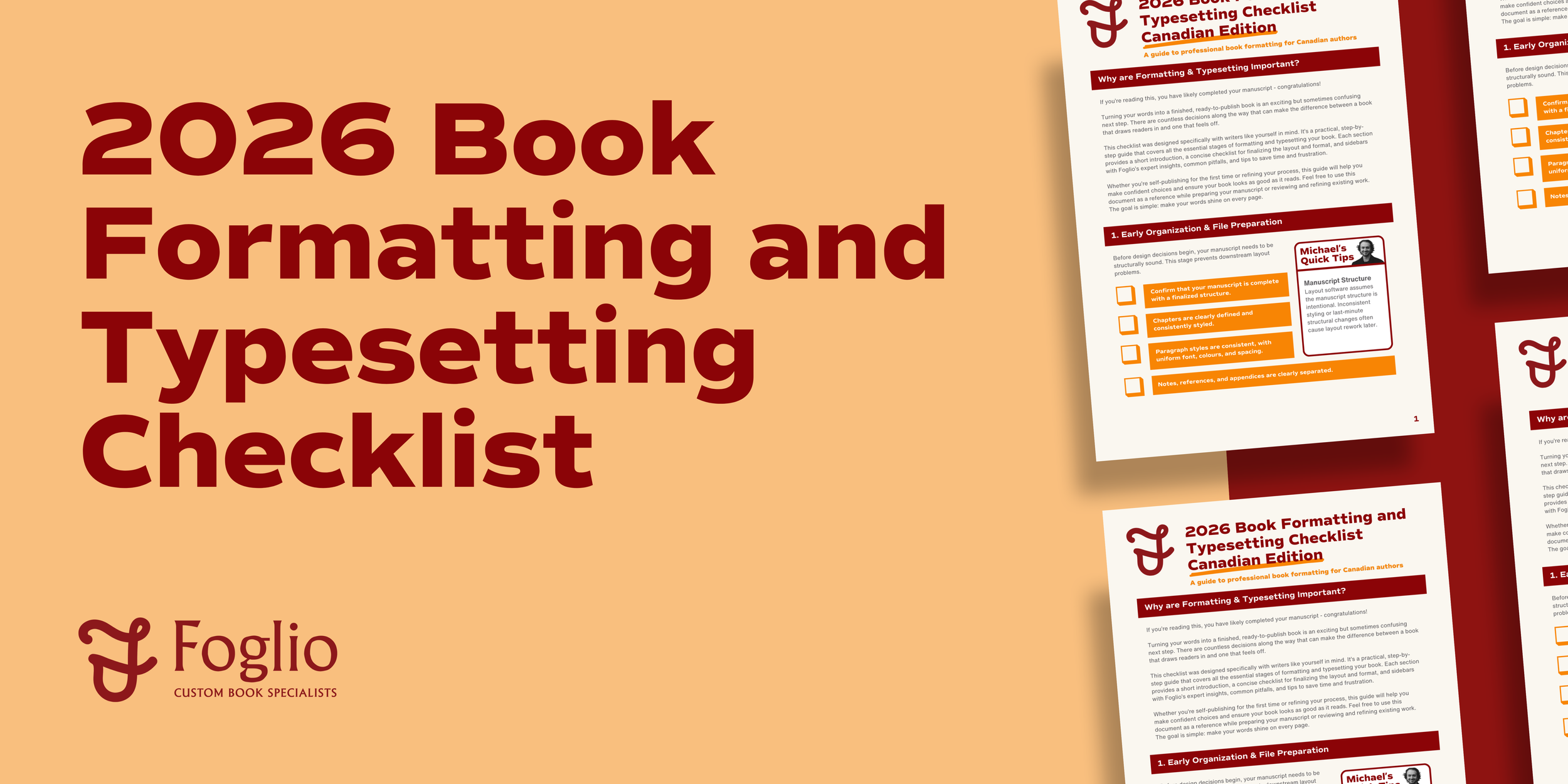
Editing also connects directly to formatting and production. A clean, well-edited manuscript makes typesetting smoother and helps avoid issues during printing or eBook conversion.
If you are preparing for the next stage, you can also explore our formatting and typesetting services here.
If you are unsure where your manuscript stands, a good place to begin is to personally assess it and reflect on each stage of editing. Knowing that each stage builds on the last will develop a more thoughtful approach to your editing. Remember: progress is the process when it comes to editing! And if you’re really not sure, a short conversation can often clarify what comes next, and what can wait.

